
In the vast world of digital marketing, the marketing influence emerging as one of the most effective weapons for brands wishing to engage their audience on social networks. In the era of platforms such asInstagram, YouTube and TikTok, influencers shape authentic and captivating content that resonates with their subscribers.
However, to fully exploit the potential of their influence marketing campaigns, brands must master the subtleties between the different types of influencers: nano, micro, macro and top.
The dynamic evolution of Influence Marketing
In its first fruitsInfluence marketing focused mainly on the celebrities and public figures. However, with the advent of social media, new actors emerged: nano and micro-influencers. Fitted modest but committed and specialized hearings, They've been able to captivate specific niches. Their ability to establish genuine relationships with their public makes them an ally of choice for brands seeking to target specific audiences.
Understanding Subtility between Influencer Categories
The nano-influencers, though modest in terms of hearing, enjoy a remarkable commitment, while the Micro-influencers, slightly larger, retain a high degree of specialization. At the other end of the spectrum, the macro-influencers Captivate hundreds of thousands, even millions of followers. Finally, the top influencers, established figures, have a massive reach on social media.
Here are some examples of sectors where you could find nano or micro-influencers
- Fitness
A certified fitness coach who shares training tips, exercise routines and healthy recipes with his community.
- Fashion and Beauty:
A fashion blogger who shares her favourite outfits, style tips and clothing brand recommendations.
- Travel and Adventures:
A passionate traveller who documents his adventures around the world, sharing travel advice, experiences stories and recommendations for accommodation and activities.
- Cuisine and Gastronomy:
An amateur chef who shares his family recipes, cooking techniques and culinary discoveries.
Diversifying Collaboration Modes
In addition to the diversity of influencer profiles, brands can diversify their ways of working together to maximize the impact of their campaigns. Key-in-hand partnerships, creative contest games, speeches at events, or participation in charitable projects are all strategies that can be adopted to amplify the reach of messages.
Optimize Influencer Compensation: A Key Component of Collaboration
In addition to the diversity of influencer profiles and modes of collaboration, a crucial aspect of influence marketing is the remuneration of partners. The remuneration of influencers may vary depending on several factors, including the networks they communicate with, the size of their audience, their level of engagement, their thematic niche and their expertise.
Below is an example of average rates by typologies of influencers:
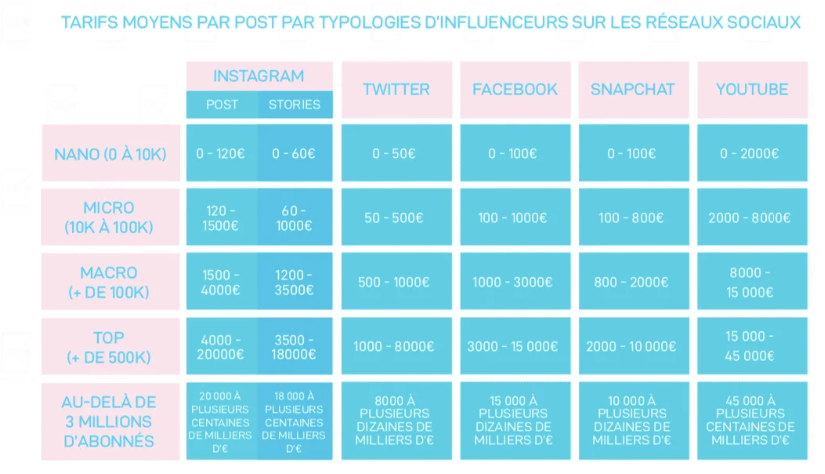
Source tableau : blog moderator
Nano and micro-influencers, although with smaller audiences, often offer higher commitment rates and more affordable collaborative costs. Brands may consider remuneration in the form of free products, commissions on sales generated or moderate monetary payments. However, macro and top influencers, with their massive reach and wide influence, generally require more substantial remuneration. Partnerships with these influencers may involve fixed fees, long-term contracts or revenue sharing on promoted products. It is essential for clearly define their expectations and their budget before engaging with influencers.
Open and transparent communication on remuneration arrangements can help build strong and lasting relationships with influential partners.
In addition, it is recommended that detailed contracts be put in place outlining the responsibilities of each party and the financial conditions for collaboration.
In short, optimisation of the remuneration of influencers is a key element of successful collaboration in the area of influence marketing.
By providing fair compensation and building relationships of mutual trust, brands can create fruitful partnerships and benefit from increased visibility, increased sales and a better perception of their brand image.
The Challenges and Opportunities of Influence Marketing
Despite its advantages, influence marketing presents challenges, particularly in terms of relationship management and impact measurement.
However, collaboration with influencers offers unique opportunities to establish authentic links with the Hearings, enhancing credibility of the mark and stimulate conversion.
In conclusion, Influence marketing remains a powerful lever for brands wishing to register in digital conversation. By mastering the subtleties between the different categories of influencers and by diversifying the modes of collaboration, brands can increase their visibility, increase their awareness and retain their audience. In an ever-changing digital landscape, influence marketing remains an essential tool for brands wishing to stand out and prosper.