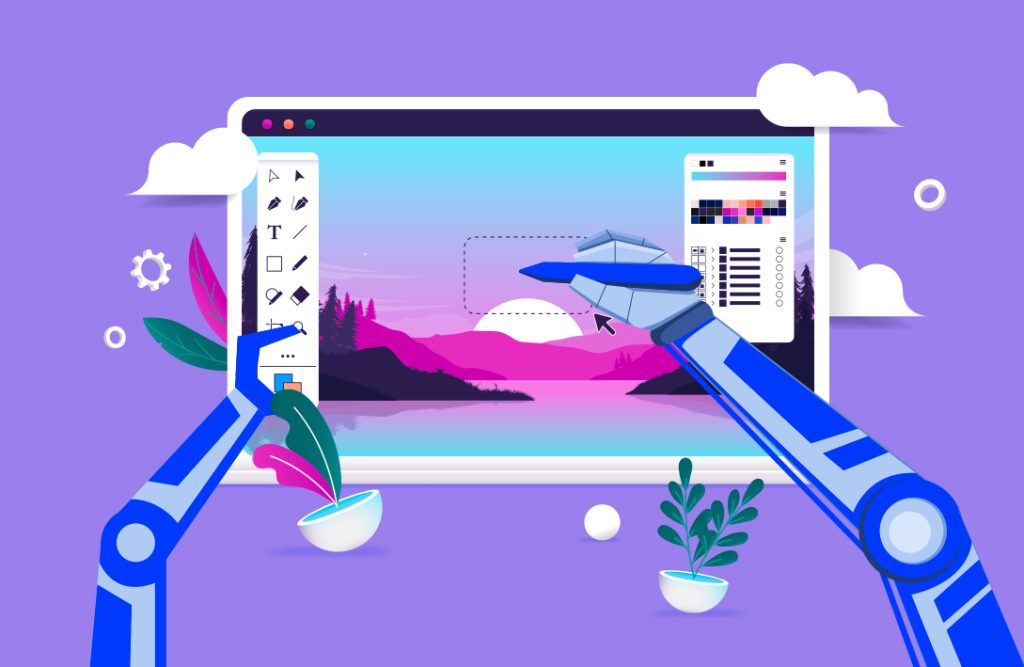
In our agency, we share offices and collaborate regularly with photographers and editors.
They clearly see the changes brought about by the integration of AI into their working methods and recognize the importance of adapting to its new tools to automate and simplify tasks that were previously tedious.
They recognize a time saving brought by the emergence of new software in the market.
Revolutionary Software
The progress of the AI has led to a real revolution in the field of photo editing. A new generation of software has emerged, driven by impressive technological advances.
These tools are now using machine learning algorithms to simplify previously time-consuming and time-consuming tasks.
From minimal brightness adjustments to the most complex transformations, retouchers and photographers today benefit from an increasingly powerful range of features.
Here are some examples of photo editing software that use artificial intelligence:
Adobe Photoshop: Adobe has integrated artificial intelligence features into Photoshop, including with the tool « Adobe Sensei » which offers features of automatic selection, image cleaning and improved sharpness.
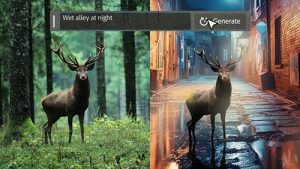
Luminar AI: This photo editing software developed by Skylum uses theIA to automate various aspects of retouching, such as improving the sky, removing skin imperfections and creating automatic masks.

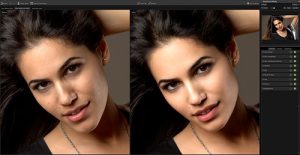
PortraitPro: Specializing in portrait editing, PortraitPro uses artificial intelligence to detect faces, adjust facial features, smooth the skin and even apply virtual makeup realistically.
Topaz Labs AI: Topaz Labs offers several photo editor plugins based on theIA, such as « Topaz Gigapixel AI » for image enlargement without loss of quality and « Topaz Sharpen AI » for the correction of sharpness.
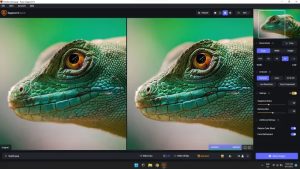
These softwares represent some examples of how artificial intelligence is integrated in the field of photo editing to offer advanced features and simplify the creative process for photographers and retouchers.
Jonathan independent photographer, testifies that he uses Photoshop's AI to manipulate images, whether to remove or add matter. This use saves him a lot of time! This allows him to automate and simplify tasks that were previously very long for him.
Importance of adaptation
Although the AI facilitates the photo editing process, it does not replace the crucial role of the retoucher. On the contrary, it completes it.
Retouchers must now adapt to these new technologies and integrate them into their daily lives. This means acquiring new skills, understanding the capabilities and limitations of the AI, and developing expertise in using these new tools.
Human-machine collaboration
The future of photo editing lies in the harmonious collaboration between man and machine. Retouchers can take advantage of the AI to automate repetitive tasks and save time, while maintaining creative control and bringing their artistic sensitivity where the AI cannot go.
This collaboration makes it possible to optimize the efficiency and quality of the work, while opening up new creative opportunities.
At Inwie's, We are convinced that this development is an opportunity to seize! Our teams or partners specialize or train to make the most of the opportunities that the AI offers in this area.